
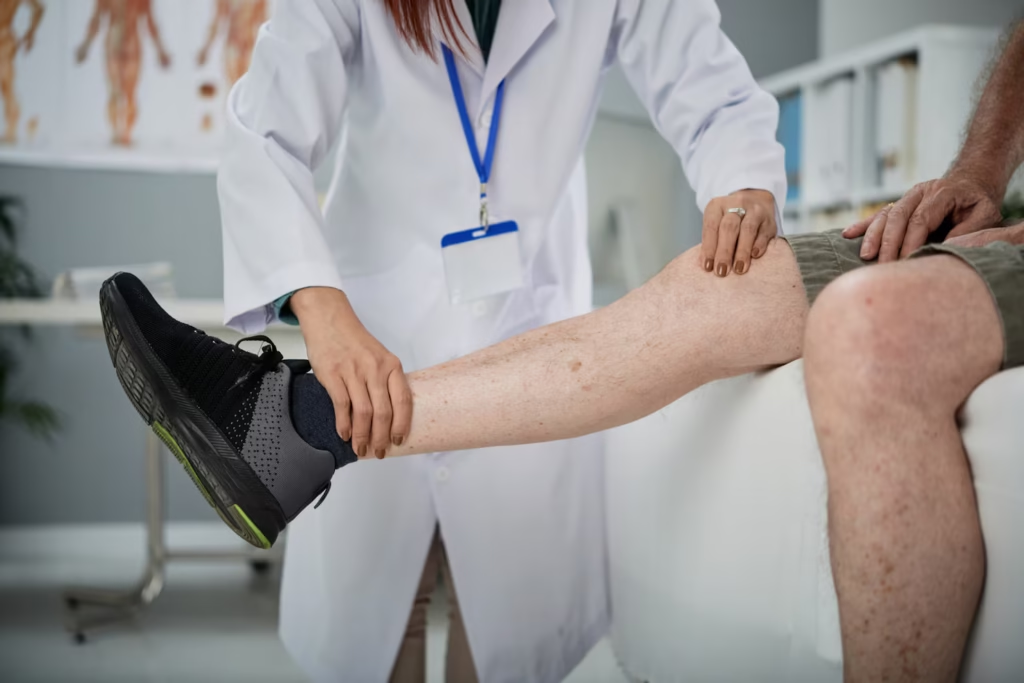
How your knees just carry the weight and alignment of the legs is important for movement. Knees may be subjected to uneven pressures when the bones of the legs are not aligned properly. Two frequent alignment patterns you will see are knock knee and bow knees.
Having some variation in the alignment of our legs may be normal, but too much deformity can affect walking and physical activity as well as how load is transmitted through the knee joint. It may also lead to chronic knee pain in some individuals, or overload specific regions of the joint.
But one needs to understand the aetiology and relevance of the deformity, because treatment is not uniform for all. Treatment varies, depending on age, symptoms, the severity of alignment anomaly and the health of the knee joint available for treatment (observation or physiotherapies; bracing or surgical-corrective / reconstructive procedures).
Dr Nagraj Shetty, Consultant Arthroscopy, Complex Knee Preservation and Shoulder Surgeon at Arthroscopy Surgery Mumbai specializes in complex knee preservation procedures like knee osteotomies/ alignment surgeries.
What Is a Knock Knee?
Knock knee is an anatomical condition that occurs when a person’s knees bend towards each other and the lower legs move outwards. The ankles could be seen a long way from one another taking the stance up with knees together.
Knock knee may become pronounced in childhood and usually improves without treatment as a child matures. Yet this important balance can, in some cases, go unused into adulthood due to sustained and pervasive alignment challenges.
In adults, knock knees may result in a change in load transmission across the knee. This can lead to discomfort, difficulty with certain activities or gradual degradation in a focal area of the joint depending on your unique situation.
Before determining whether or not the alignment needs to be treated an accurate evaluation is important.
What Are Bow Knees?
Another alignment pattern is known as bow knees — or bow legs, rather. When the feet and ankles are together, this creates an outwardly curved shape in your thighs to keep the knees farther apart.
Bow legs could be a common trend in infants and occurs naturally when they begin to walk, but it will often straighten out as the child grows. But adult bowing that is persistent or extreme can change the way forces go through the knee.
In some cases, bow knee alignment can put more pressure on the inner part of the knee. Should there be prior damage to the cartilage or meniscus, abnormal alignment will add further stress upon the joint.
This is why some forms of knee pain and deformity are better managed with alignment assessment.
Read More: HYROX Knee Pain – What is It and How to Protect Your Long-Term Joint Health
What Causes Knock Knee?
Results of knock knee There can be several reasons for the knock knee. In kids, it can be normal growth and development. In some cases, alignment can be influenced by bone development, history of injury in that area of the knee, other conditions related to specific shapes or changes around the knee.
In adults, the leg alignment may also be related to changes from past injuries or degenerative changes of the knee.
What is really important point, the legs’ appearance does not decide if treatment is needed. A complete clinical evaluation, in addition to the appropriate imaging can describe the degree and location of any deformity and ascertain its effect on the knee.
Best Inquiries That Knock Knee Wrinkle and Bow Knees Becomes aware of?
This process typically starts with a review of the patient’s symptoms, activity level, medical history and physical examination.
This can be followed by imaging to help evaluate the bones and alignment of the lower limb as a whole. Because in patients slated for an alignment procedure, that correction needs to be specific in terms of the location and amount of deformity, these types of details can be critical.
The treatment route can also depend on the condition of cartilage, meniscus and other structures within the knee.
His areas of specialization are knee osteotomies and high complexity preservation surgery for various knee conditions at Arthroscopy Surgery Mumbai Dr. Nagraj Shetty. His method of preserving knees aims to understand individual alignment and the nature of the disease before choosing an aligned treatment.
Is surgery possible for a knock knee?
Not all knock knees can be treated surgically.
For a mild deformity which is not causing significant symptoms or functional problems, occasional observation and follow-up may be advised. Physiotherapy may be recommended when findings on your imaging tests and physical examination show that rehabilitation or strengthening of the muscles, flexibility and movement can help reduce disabling knee symptoms.
Non-surgical treatment does not necessarily mean that the bone alignment can be changed. Rather the aim might be to ameliorate functionality, regulate pain as well as itch and also watch.
The correct management is determined by factors like the type of injury, its severity, and the status (age/condition) of the knee.
Does it Help with Knock Knee Braces?
Depending on the patient and their age, condition and cause of the misalignment issue braces or bracing may also be suggested.
In some instances, a brace can alleviate knee instability or off-load certain areas. In adults, braces are not a cure all for an established structural bone deformity.
As such, using a brace without getting to the bottom of the problem with your alignment may not fix it. The use of bracing may be evaluated in a specific case using a specialist assessment.
When Is Alignment Surgery Needed?
Alignment surgery may be indicated in these cases where the major alignment abnormality is associated with persistent knee pain, functional limitations or can damage the joint as a result of uneven loading of the knee.
This can be influenced by a number of variables including extent and location of the abnormality, history of pain, activity levels, status of cartilage and meniscus and general health of the knee.
Osteotomy – This is an important process we use for certain types of alignment issues.
Knee-related Osteotomy and Alignment Operations
Osteotomy is a procedure where the bone is carefully cut and repositioned, to correct alignment. It aims to alter the forces transmitted across the knee and in appropriate cases patients unload the part of a joint that is affected or overloaded.
Osteotomy: Varus or valgus osteotomies can be done in different anatomical locations based on the deformity and where correction is needed.
This might involve higher tibial osteotomy, distal femoral osteotomy and for complex problems, double-level osteotomy. It all depends on the individual and where the malocclusions begin. These osteotomy and alignment procedures were performed at Dr. Nagraj Shetty’s knee preservation practice.
It is not just going to change the aesthetics of the legs. This specifically pertains to the mechanical alignment of the knee and retention of natural joints where indicated.
Knee Conservation With Dr Nagraj Shetty
Dr Nagraj Shetty has done specialization in Arthroscopy and complex knee preservation/reconstructive procedures. He specializes in knees including osteotomies, cartilage procedures and meniscus procedures as well as ligament reconstruction.
In patients with knee problems related to alignment, the treatment plan depends on the individual anatomy of the knee and any associated clinical pathologic conditions. In selected situations, an alignment process may be an element of a more extensive knee conservation plan.
The goal is to correct the problem but still preserve as much of the natural knee joint as possible.
When you have prominent knock knees or bow knees accompanied by symptoms like knee pain, trouble during activity or worries over leg alignment, some of the common questions about your problem can be answered via assessment to establish whether the alignment presents within a normal range or needs intervention.
Frequently Asked Questions
What causes a knock knee?
Knock knee may also simply be a part of normal growth in children, however any significant or persistent alignment abnormalities may relate to bone development, previous injuries or certain bone conditions or changes affecting the knee. Each cause needs to be assessed on its own merit.
What are bow knees?
Bow knees, or bow legs, happen when the leg joints curve outward so that there is a space between the feet and a gap between your ankles while standing with your knees together. In adults with bowing, this can cause the knee to share load differently.
Can we treat a knock knee without surgery?
Yes, although that does depend upon what the cause is and how bad it gets. In mild non-severe cases that do not present with significant signs, there may be no need for any treatment. They have well-trained physiotherapy & non surgical interventions to try to treat the symptoms, except that they never will correct a structural bone deformity that has already been established.
Knock Knee Treatment with Bracing
In certain situations, bracing may play a role based on the patient’s age and underlying history. Braces are not a panacea any structural alignment goof depends on the case at hand and braces can certainly bring improvement but cannot be thought of as a cure all. It is something that does need a specialist assessment before determining whether this bracing is appropriate.
When is alignment surgery needed?
If you have a painful, deformed knee that cannot be corrected using non-surgical methods or are struggling with extreme loading of the knee or other functional difficulties attributed to your VBAA deformity, then alignment surgery may well be considered. The alignment may be corrected by means of osteotomy in selected patients, which can support knee preservation.
Do the Right Thing For Your Knee
Knock knee and bow knees are not just about how the legs actually look. If the alignment is large enough, it can change how forces move across the knee which may in turn contribute to pain or joint problems.
An early assessment can determine whether the child has functional scoliosis or structural (a problem with bone itself) and then establish how severe it is to see if non-invasive care only, watchful waiting or a procedure to align can be recommended.
Dr. Nagraj Shetty is a specialist in knee preservation and osteotomies for those with knee alignment issues, which he performs at his associated hospital facilities throughout Mumbai.
| Read More: Advances in Knee Joint Preservation Surgery