
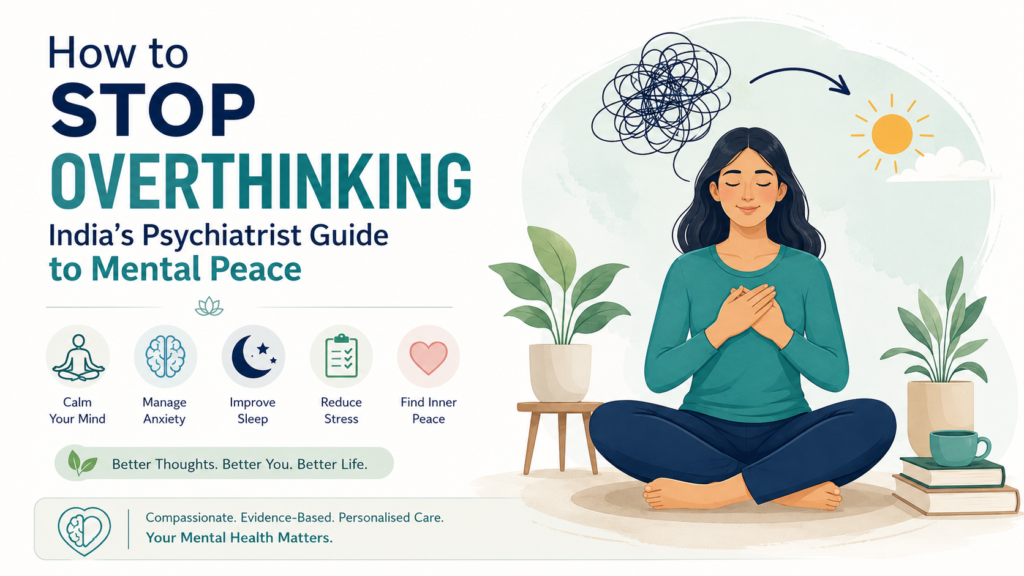
Millions suffer from racing thoughts, self-doubt, fear of failure and emotional exhaustion in silence in our fast-moving world today. No matter if it is work stress, relationship stress, study stress, financial issues or the pressure of social norms over so many people; The mind hardly seems to slow down. These thoughts are all part of a never ending cycle that can result in anxiety, fatigue, sleep issues, as well as physical symptoms.
If you have been looking for ways of how to calm an overactive mind, you are not alone. With life in urban cities like Mumbai hardly coming to a standstill, overthinking has become one of the most prevalent mental health issues being faced in India today.
Dr Amulya provides compassionate, evidence-based mental health care that is focused on recovery from emotional pain and regaining peace of mind. Anxiety and emotional distress can alter the way we think, impact our sleep, how efficient we are in focusing on given tasks and drawing a baby koala (yes, they are very cute), affecting our quality of life overall according to the clinic.
What Is Overthinking?
Overthinking is repeating and dwelling on the same thoughts, worries, fears or situations without arriving at a solution. This can often involve ruminating on conversations that have already taken place, rehearsing doomsday scenarios in the mind, or obsessively fretting over what is to come. Therapy and counselling services
Even minimal effort leaves them mentally drained. Their brain works all day long whilst sometimes into the night.
Common signs of overthinking include:
- Constant worrying
- Difficulty sleeping
- Fear of making mistakes
- Replaying conversations repeatedly
- Lack of concentration
- Feeling emotionally exhausted
- Trouble making decisions
- Increased anxiety levels
Mental health experts explain that chronic anxiety, overthinking or tension often hinders normal functioning in life, social ties, performance at the workplace and emotional wellbeing.
Why Overthinking Happens
The first step in learning how to calm an anxious mind is understanding where the anxiety is coming from. Overthinking does not generally happen overnight. It results from various emotional pressures like unreleased fear, trauma, pressure or mental health disorder.
1. Anxiety Disorders- Anxiety – people who are anxious, hasten thoughts, anxiety restlessness panic and worry. Anxiety holds the brain alert all the time.
2. Fear of Failure- Most of us overthink because we fear being judged, rejected or failing. This is especially the case among students and working professionals.
3. Emotional Trauma–Emotional past trauma, heartbreak, bullying or challenging childhood can add on to reinforcing negative thinking processes.
4. Stressful Lifestyle- The fast-paced lifestyle in Mumbai, constant work pressure, long commuting hours and excessive time spent on gadgets easily lead to sharp rise in anxiety or overthinking.
5. Lack of Motivation Causes – Emotional lack of motivation One major cause due to unhealed emotional burnout, aging stress, anxiety and mental fatigue. When your mind becomes too busy, you find yourself having lost the desire to engage in things that excited you before.
What an Overthinking Affects Mental Health
Even if most people consider overthinking as a thing to just think about too much, it tends to hurt physical and mental health in the long run.
Effects may include:
- Sleep disturbances
- Mood swings
- Panic attacks
- Fatigue
- Irritability
- Poor productivity
- Emotional numbness
- Social withdrawal
Online mental health discussions reveal that those who suffer from overthinking commonly refer to it as being in a vicious cycle of thoughts stealing peace and concentration.
Left untouched for too long, anxiety and overthinking can lead to depression, chronic stress, and emotional burnout.
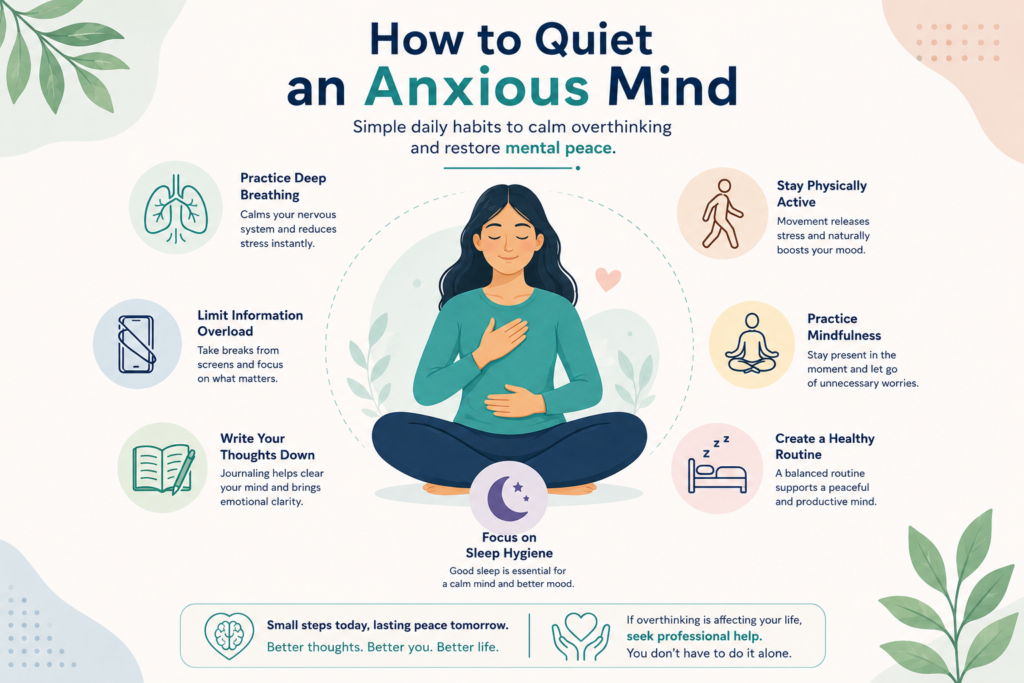
How To Quiet an Anxious Mind the Safe Way
The great news is that if you are asking how to calm an anxious mind, there are ways to train your brain to slow down and restore emotional equilibrium.
Practice Deep Breathing
Calming Nervous System Breathing exercises balance the nervous system و control anxiety & reshape. Slower breaths and how we breathe emits a signal for calmness in the brain and body.
Doing simple breathing techniques every day can create a sense of balance for those who battle with anxiety and overthinking.
Limit Information Overload
The never-ending barrage of social media, news and digital distractions keeps the brain overexcited. Breaks from the screen can greatly enhance our mental clarity.
Write Your Thoughts Down
Journaling Journaling is one of the easiest yet most effective overthinking problem solutions. Taking notes clears the mind and clarifies feelings.
Stay Physically Active
Movements like walking, yoga, stretching and exercises help release stress hormones and are useful in naturally improving your mood.
Focus on Sleep Hygiene
Sleep deprivation causes anxious thoughts. Sleep is a vital component in learning how to calm an anxious mind.
Practice Mindfulness
Mindfulness tips involve encouraging people to focus on the present rather than looking ahead with anxiety, or remembering things from the past.
Other times, self-help techniques are insufficient. For, if your overthinking starts to interfere with work, relationships, sleep or in daily life, then you must reach out for professional help.
Dr. Amulya Shetty’s Clinic provides customized psychological health therapy for anxiety, depression, ADD/ADHD, PTSD and moulding overall mood health in people. Dr. Amulya Shetty is one of the leading Mumbai psychiatry who are known in a humane and empathetic way towards mental healthcare supported by scientific facts.
Therapy, lifestyle guidance, counselling and medication (when required) are combined at the clinic to help interested patients regain emotional control and confidence.
Getting Professional Help Can be There
Other times, self-help techniques are insufficient. For, if your overthinking starts to interfere with work, relationships, sleep or in daily life, then you must reach out for professional help.
Dr. Amulya Shetty’s Clinic provides customized psychological health therapy for anxiety, depression, ADD/ADHD, PTSD and moulding overall mood health in people. Dr. Amulya Shetty is one of the leading Mumbai psychiatrists who are known in a humane and empathetic way towards mental healthcare supported by scientific facts.
Therapy, lifestyle guidance, counselling and medication (when required) are combined at the clinic to help interested patients regain emotional control and confidence.
Working on Anxiety and Overthinking with Therapy
There are evidence-based therapies that mental health practitioners may utilize in treating anxiety and overthinking.
1. Cognitive Behavioural Therapy (CBT)
Thus, CBT focuses on understanding these negative thought processes and replacing them with healthier thought patterns.
Cognitive Behaviour Therapy – This treatment approach is used at Dr. Amulya Shetty’s Clinic and helps the patients understand their emotions, lessen excessive worrying and learn coping skills.
2. Stress Management Techniques
Therapeutic methods also include emotional regulation, mindfulness practices, relaxation techniques, and healthier ways to cope.
3. Medication Support
Medication: A doctor may even prescribe drugs to treat extreme anxiety signs or panic attacks under psychiatric supervision.
4. Overthinking and Lack of Motivation
Of the many symptoms that short change us, loss of motivation from mental exhaustion is one.
What some people searching for lack of motivation causes are really dealing with is a depth of anxiety, emotional exhaustion, or chronic overthinking that they cannot (or will not) face.
When your brain continues to be overloaded with stress, even banal tasks still become challenging. This leads to procrastination, loss of confidence and mentally drained.
Solution to overthinking in daily life
The solution to your overthinking problem requires a level of consistency and self-awareness. There is no overnight solution to this, yet daily habits done regularly can give you peace of mind over the long term.
Here are some practical habits:
- Set boundaries with negative thoughts
- Avoid excessive self-criticism
- Take regular breaks from work
- Maintain a healthy routine
- Talk to trusted people
If these thoughts get so overwhelming, see a therapist
Focus on achieving realistic goals rather than the ideal one
Keep in mind that healing is an incremental process. Mental peace is not about getting rid of every thought but how to handle them the right way.
Final Thoughts
How To Calm An Anxious Mind in Today’s Stressful World Mild worry can be healthy, but unending musings on everything possible issue you can think of would affect your whole life slowly with little mercy.
Whether you have trouble with anxiety and overthinking, finding an effective overthinking problem solution, or identifying hidden lack of motivation causes – consulting a professional can help restore mental clarity and emotional equilibrium.
Compassionate Psychiatric Care – Healing, Growth, and Long-term Mental Wellness with Dr. Amulya Shetty’s Clinic Dr. Amulya is equipped with one of the best psychiatry in Mumbai who are here to listen to you, support you and make emotional stability a reality through personalized treatment plans processed in line with your individual needs.
Frequntly Asked Question
1. What does overthinking actually mean?
Overthinking is a mental pattern where a person gets stuck in continuous thoughts about situations, decisions, or worries, even when there is no useful outcome from it. It usually creates mental stress and emotional tiredness.
2. What causes a person to overthink?
Overthinking often develops due to emotional stress, anxiety, fear of making mistakes, past negative experiences, or pressure from personal, academic, or work life. A busy lifestyle can make it worse.
3. How can I calm my mind when I start overthinking?
You can interrupt overthinking by shifting your attention to slow breathing, physical movement, writing down thoughts, or focusing on what is happening right now instead of future worries.
4. Can overthinking impact mental well-being?
Yes, when overthinking continues for a long time, it can disturb sleep, increase anxiety, reduce focus, and make a person feel mentally drained or emotionally low.
5. When is it necessary to get professional help?
If overthinking starts affecting your daily life, relationships, sleep, or work performance, then speaking to a psychiatrist or mental health expert is recommended for proper support and treatment.